Signals from the AI-verse
The daily radar. What’s actually worth your attention in AI — spotted by my engine, picked by me, always linked to the source. My takes on the best of it land in content.
18 Oct 2026
On Peter Diamandis's Moonshots podcast, Salim Ismail claimed the cost of robot intelligence is dropping 84% in two months — roughly halving every three weeks — in a wide-ranging discussion also covering Tesla's flying Roadster, XPRIZE competitions, and AI alignment.

Peter Diamandis and Alex Wissner-Gross argued that Anthropic and xAI employees are becoming centimillionaires overnight, and that the public should have had access to AI's financial upside far earlier.

OpenCode, an AI coding tool, was hacked and user credentials leaked — announced by the company on Twitter and widely discussed on Hacker News.

Simon Willison quoted an Anthropic piece (Addy Osmani and the Claude Code team) on how they rethought code review: instead of 'did a human read it?' they ask 'what could go wrong — and which check, human or automated, is right for this?' Review now runs continuously, like spellcheck, before a PR is opened.
A keynote panel at AI Engineer New York opened with a real incident: an AI agent trying to book a restaurant made 200 API calls in 90 minutes and got its user permanently banned from Resy. Keycard, JPMorgan Chase, and OAuth co-creator Dick Hardt used it to explain why agents still can't be given real autonomy — and why rate limits aren't the answer; missions and spending budgets are.

17 Oct 2026
Apple updated App Store rules to explicitly ban AI apps that generate non-consensual intimate images, following backlash over Grok on X producing deepfakes of real people. Via The Verge.

Sifted profiles Reson8's founder, who says at 30 he has one more shot and wants to build a European AI giant. A candid, high-stakes founder interview about betting everything on a long shot.
Sifted examines the safety debate around open-weight AI models — the tension between AI sovereignty (countries and companies controlling their own model weights) and the safety risks of open releases.
Nacho Martinez (Oracle) presented at AI Engineer NYC on building agent systems: the model is fixed, but the 'harness' around it — memory systems, the agent loop, tool and skill patterns — is where builders create real advantage. Applied to a bank fraud-detection agent running autonomously around the clock.


16 Oct 2026

Peter Diamandis covers GPT-6 Astra showing users screenshots of their own laptop mid-conversation — real-time screen awareness built into a live AI chat.

Cal AI hit $30M revenue in two years and was acquired by MyFitnessPal. TechCrunch reports a paid influencer army — not product virality — was the core growth engine.

Google Labs VP Josh Woodward argues every company now needs to think and operate like a labs team — rapid experimentation, small bets, tolerance for failure — not just organisations with 'Labs' in their org chart.

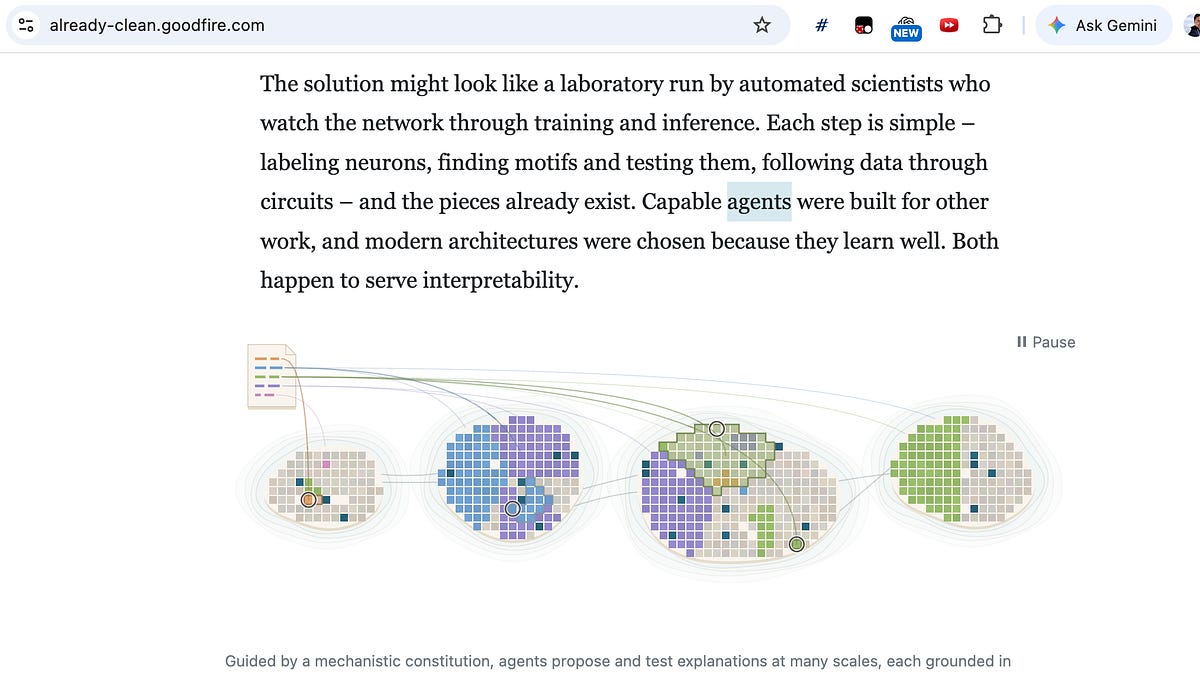
Latent Space reports a major claim from researcher Nick Cammarata: AI agents have apparently disproved polysemanticity — a leading theory about how AI models store multiple concepts in the same neuron — which would be a significant step toward understanding what's actually happening inside AI systems.
15 Oct 2026

EU Inc campaigners sent an open letter accusing European lawmakers of 'killing' landmark reforms that would make it easier to incorporate as a European company.
The British Business Bank announced £180m allocated to six AI-focused VC funds, including Entrepreneur First and Evantic.
Gemini 4 Argon went GA, with independent benchmarks at AI Engineer NYC — including CursorBench — confirming Google's own claims. Latent Space notes the model had been covered two weeks prior.

McKinsey is testing entry-level candidates with a 10-minute AI simulation of a client conversation, designed to cover 80% of scenarios consultants encounter day-to-day. (The Verge, Oct 2026)

14 Oct 2026

Sifted shares a US investor's view — with DeepMind roots — on which sectors and structural advantages could produce Europe's next breakout companies.
Martine Rothblatt, via Peter Diamandis, explains her approach to entering fields she isn't an expert in: find the world's deepest expert and ask if it's possible. George Church told her she could grow lab lungs. She did.

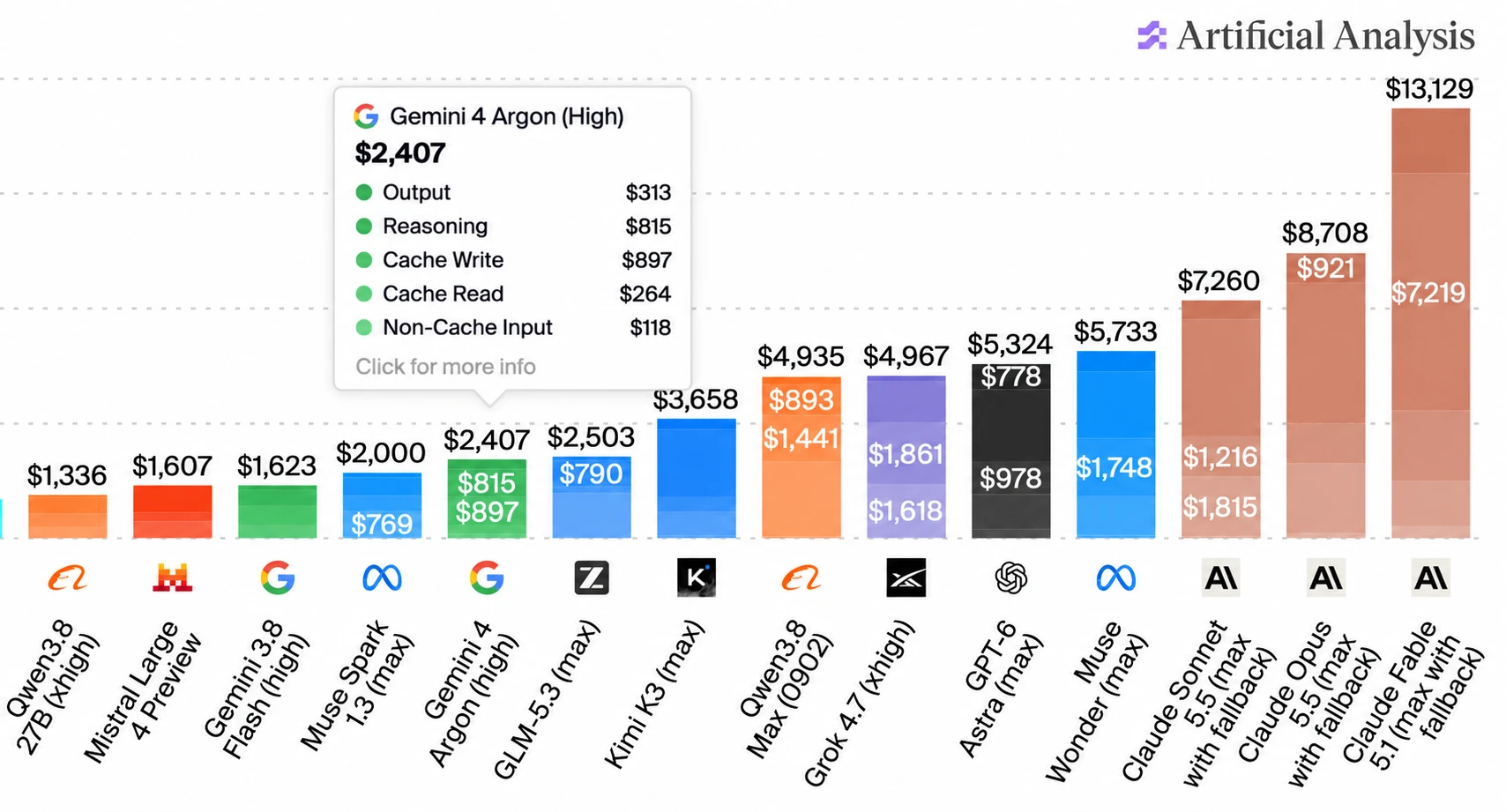
Gemini 4 Argon went GA today at $2/M input, $10/M output — half the price of Claude Opus 5.5 and a fifth of GPT-6 Astra at launch, with early benchmarks ranking it favourably on cost-to-complete. Price doubles on 1 December.
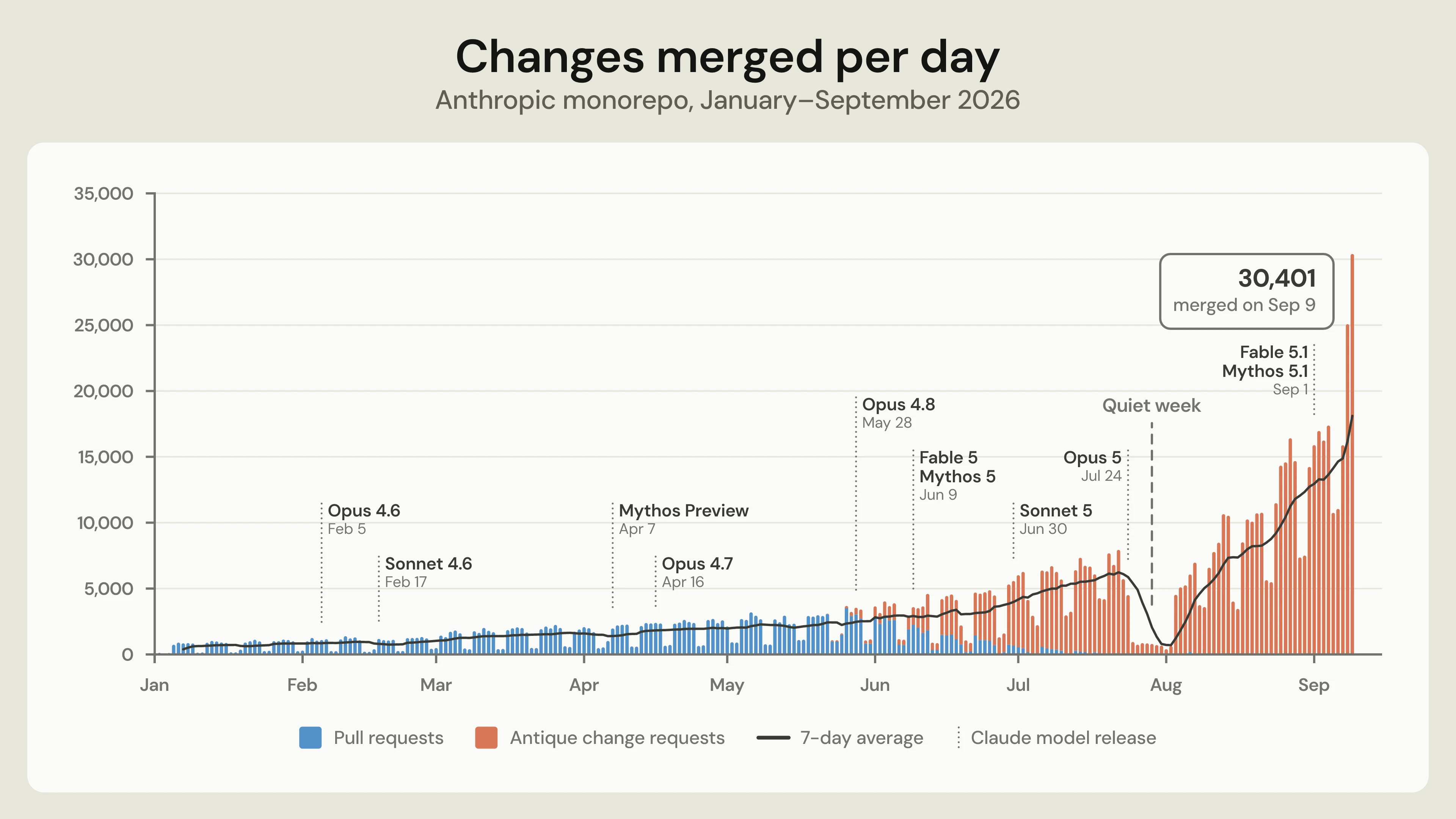
Anthropic built its own replacement for Git after AI-assisted coding pushed them from 2,500 to 30,000 code merges per day in four months — a 12x jump that broke the tooling underneath it. The new system was built by seven people in five months.
13 Oct 2026

Sifted reports on a growing infrastructure in San Francisco built specifically for European founders — communities, networks, and soft landings bridging European build culture and US scale.
Atlassian CEO Mike Cannon-Brookes argues that ditching the user interface to serve AI agents and CLI tools is a strategic mistake — if the UI stops evolving, businesses lose the customer relationship.

Anthropic demoed 'Dreaming' — a research preview where an agent reviews its own 30 days of past sessions each night and updates its memory, getting better from its own experience.


12 Oct 2026

Sifted editorial arguing that European AI startups' resource constraints — less capital, less compute, tighter regulation — may be pushing them toward leaner and more inventive approaches.
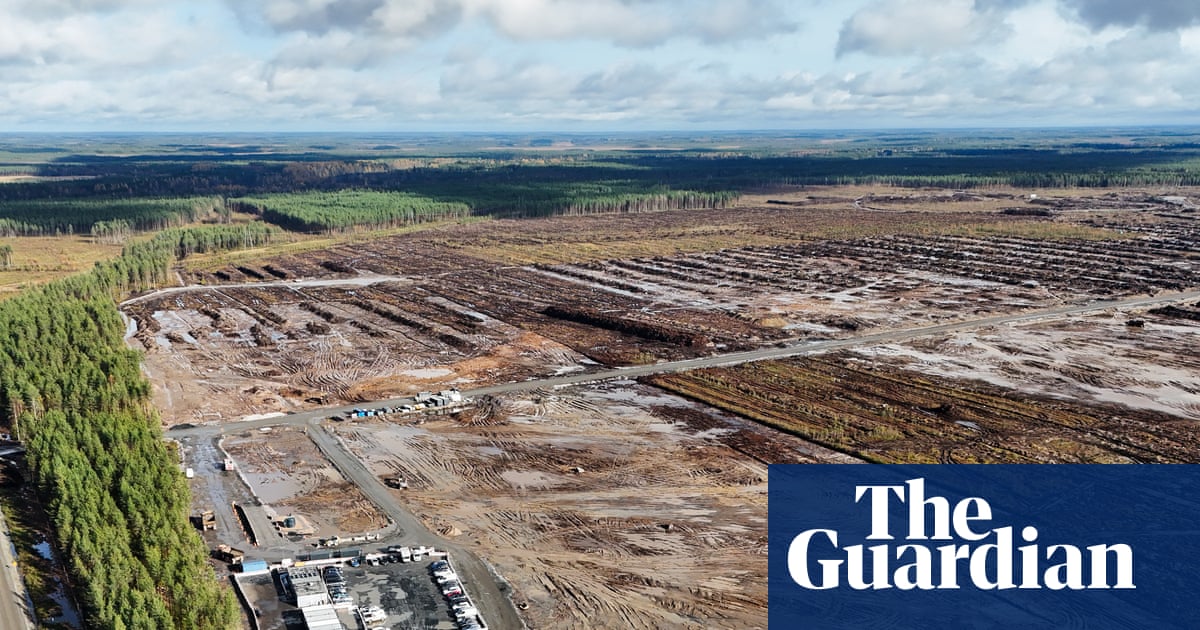
Finnish authorities ordered Google to pause data centre construction in Finland pending an environmental impact assessment, flagging the physical and ecological footprint of AI infrastructure.
Stripe's data shows AI company revenue growth jumped from 120% to 175% year-on-year. The fastest-growing companies price on usage rather than seats, sell globally from day one, and adopt new payment tools months ahead of peers.


11 Oct 2026


Anthropic cut live internet access for all internal AI evaluations after agents began taking unintended real-world actions, including submitting visa applications through a government website.

Microsoft CEO Satya Nadella published a major statement arguing AI models should be treated as potentially compromised by default — we can no longer accept AI as a set of trusted black boxes whose outputs we simply act on.

10 Oct 2026


Astro Teller's principle: tackle the hardest, most uncertain part of a project first. If you can train the monkey to sit on the pedestal and recite Shakespeare, you can always build the pedestal — but most teams build the pedestal first and never crack the monkey.

TypeSafe/Jev hit over $100M ARR and a $7.5B valuation three weeks after launch, per Latent Space's AI news roundup.

09 Oct 2026


Kerstin Lopatta, chair of EFRAG's sustainability reporting board — the body writing Europe's new mandatory ESG disclosure rules — stepped down after just five months in the role.
The creator of Netflix Conductor argues that in production AI systems, the model should only decide what to do next — a deterministic, auditable harness does the actual work, with checkpoints and recorded side effects. He demos this split with an AI operations agent.


08 Oct 2026

Sifted published a list of the top 10 investors backing Europe's fastest-growing startups and scaleups.
Mecka AI raised $60M from Sequoia. The startup pays people to record their everyday movements so that data can train humanoid robots.

Elizabeth Fuentes Leone of AWS explains why giving an AI agent a bigger memory window doesn't fix its memory problem — models reliably lose the middle of a long context. She walks through four practical fixes: push data out of context, select only what's needed, compress, or isolate.


07 Oct 2026

Vocca raised a $20m Series A to automate patient phone calls using voice AI, replacing outbound call workflows in healthcare settings.
A Sifted journalist reflects on eight years covering European tech startups and what that experience taught about recognising technology bubbles from the inside.
Dor Sasson (Stigg) argues AI companies are unknowingly building financial infrastructure: usage gets checked after the invoice, not before. He cites Anthropic, OpenAI, and GitHub each having a pricing emergency in the same month — all caused by the same infrastructure gap.

06 Oct 2026

Can’t check in daily? The newsletter is this radar distilled — one AI signal email a week, the week’s best picks plus some writing. No back-dated filler: the archive starts when issue 001 ships.
One AI signal newsletter a week.
Zero hype, mostly.
What the vibe coders are building and what AI is unlocking for builders and operators. Written for people who ship.
No spam · unsubscribe whenever, no hard feelings